
Optimization of Biogas Production from Pineapple Peel Waste (Ananas comosus) through Anaerobic Fermentation with Thermal Pretreatment
Article Sidebar
Main Article Content
Abstract
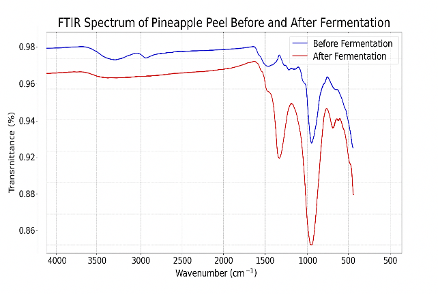
The increasing global energy demand and depletion of fossil fuel reserves have prompted the search for sustainable energy alternatives. Biogas, produced through anaerobic digestion of organic waste, presents a viable solution. Pineapple peel (Ananas comosus), a major byproduct of Indonesia's fruit processing industry, remains underutilized despite its high lignocellulosic content, which includes cellulose, hemicellulose, and fermentable carbohydrates. This study investigates the potential of pineapple peel as a biogas substrate through a series of pretreatment and anaerobic digestion processes. The peel was thermally pretreated (60–100°C for 25–60 minutes) to enhance biodegradability, then digested with cow manure in a 1:1 ratio under mesophilic conditions (30–37°C) for 30–35 days. Parameters such as TS, VS, BOD, COD, methane yield, pH, and temperature were monitored. Results showed significant reductions in TS, VS, BOD, and COD, indicating efficient organic matter degradation. Methane concentration reached 67.27%, with a biogas yield of 357.19 mL/g VS. FTIR and SEM-EDX analyses confirmed structural breakdown of lignocellulosic bonds, particularly hemicellulose and lignin, enhancing substrate accessibility. The findings demonstrate that pineapple peel, with appropriate pretreatment and co-digestion, is a promising feedstock for sustainable biogas production, offering both environmental and economic benefits in tropical agricultural regions.
Downloads
Article Details

This work is licensed under a Creative Commons Attribution 4.0 International License.
Copyright and Licensing
For all articles published in Fullerene Journal of Chemistry, Authors retain some copyright and grant the journal right of first publication with the work simultaneously licensed under a Creative Commons Attribution 4.0 International (CC BY 4.0) that allows others to share the work with an acknowledgment of the work's authorship and initial publication in this journal. Authors are able to enter into separate, additional contractual arrangements for the non-exclusive distribution of the journal's published version of the work (e.g., post it to an institutional repository or publish it in a book), with an acknowledgment of its initial publication in this journal. Authors are permitted and encouraged to post their work online (e.g., in institutional repositories or on their website) prior to and during the submission process, as it can lead to productive exchanges, as well as earlier and greater citation of published work. In addition, the article may be reused and quoted provided that the original published version is cited. These conditions allow for maximum use and exposure of the work while ensuring the authors receive proper credit.
Authors are free to:
- Share - copy and redistribute the material in any medium or format
- Adapt - remix, transform, and build upon the material for any purpose, even commercially.
Under the following terms:
- Attribution - You must give appropriate credit, provide a link to the license, and indicate if changes were made. You may do so in any reasonable manner, but not in any way that suggests the licensor endorses you or your use.
- No additional restrictions - You may not apply legal terms or technological measures that legally restrict others from doing anything the license permits.
Notices: You do not have to comply with the license for elements of the material in the public domain or where your use is permitted by an applicable exception or limitation. No warranties are given. The license may not give you all of the permissions necessary for your intended use. For example, other rights such as publicity, privacy, or moral rights may limit how you use the material.